Should I Sell a Discontinued Rolex Now or Wait for More Appreciation?
For collectors and investors alike, the question of whether to sell or hold Rolex watches that have been discontinued is both common and complex. The Rolex market is defined by a delicate interplay of scarcity and demand trends, where limited supply and collector enthusiasm often fuel significant price swings. The allure of appreciation after a model’s retirement is irresistible to many, but market timing watches requires nuance, up-to-date data, and understanding of specific valuation drivers.
Why Discontinuation Matters: Finite Supply Creates Lasting Value
When Rolex discontinues a model, it permanently caps the supply available on the market. Unlike vintage watches which naturally age over decades, a recently discontinued reference becomes a finite asset almost overnight. This finite supply often leads to increased collector demand, especially if the model has iconic status, unique design features, or historical significance.
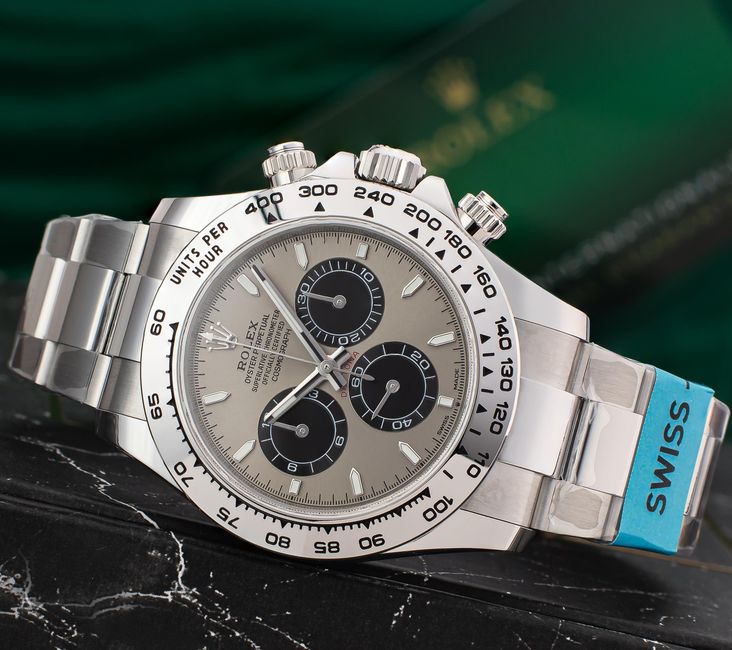
To illustrate the potent effect of scarcity, consider the 2017 Phillips auction sale of a Rolex Daytona “Paul Newman” ref. 6239, which fetched an astonishing $17.8 million. This legendary example beyond its name, dial, and provenance embodies how rarity combined with desirability fuels monumental appreciation over time.
Market-Based Valuation: Tools to Help Decide Whether to Sell or Hold Rolex
Determining whether to sell now or wait for further appreciation requires more than a gut feeling. Modern traders and collectors rely on a set of market-based valuation tools and evaluation inputs that closely analyze comparable sales and product-specific factors.
1. Comparable Sales Analysis
Analyzing current and recent auction results, private sales, and dealer listings for similar references is essential. The key is to look at current comparable sales, which take into Informative post account the exact model, dial and bezel configurations, production years, and other nuances.

2. Key Evaluation Inputs
- Reference Number: The specific model dictates inherent value differences—even subtle variations can affect pricing significantly.
- Dial and Bezel Configuration: Some dial colors or bezel materials are far rarer than others and can cause price swings of tens of thousands or even more.
- Production Years: Limited production runs or specific serial year ranges sometimes command premium values.
- Completeness: Watches accompanied by original box, papers, and accessories consistently earn a 10-30% premium. Collectors prize completeness as proof of provenance and condition.
- Service History: Documented service history with authorized Rolex service centers can add confidence and value, but excessive polishing or part replacements may detract from originality.
How Configuration Details Drive Price Swings
It is common to see noticeable price disparities between references that are essentially the same model but differ in dial color or bezel type. For example:
- The Rolex Submariner with a black dial and bezel is often valued differently from the “#Hulk” green bezel/dial edition or the “#Kermit” green bezel vintage model.
- Rolex GMT-Master II models with a Pepsi bezel (red/blue) tend to generate more buzz and thus higher value than the all-black bezel variants.
- Dial variations—such as rare “sigma” dials with gold indices or exotic “Paul Newman” styles—can command multiples of standard prices.
Such nuances make it critical to identify the exact configuration before attempting a valuation or market timing. A one-size-fits-all approach will inevitably underestimate or overestimate value.
The Premium on Completeness: Box, Papers, and Provenance
A recurring theme in high-end watch sales is that complete sets outperform lone watches. Discontinued models benefit even more from this effect, as buyers prize proof of authenticity and history.
Collectors value More help attributes like:
- Original Rolex box with model-specific design
- Guarantee and warranty cards or papers
- Instruction booklets and hang tags
- Original purchase receipts or service records
Missing any one these can reduce offers by 10-30%, and completeness often matters more for retired models due to heightened concern about provenance in the secondary market.
Market Timing Watches: Risks and Rewards of Selling Now vs. Holding
Should you sell or hold Rolex? While hindsight is always 20/20, here are some factors to consider when timing the market:
Reasons to Sell Now
- Strong current demand: Markets fluctuate. If current comparable sales indicate peak prices or a bullish trend, locking in profits may be wise.
- Financing needs or portfolio rebalancing: Cash liquidity or diversifying investments can take precedence over speculation.
- Upcoming new model releases: Rolex often releases new variants that can shift collector attention, potentially softening prices for older references.
Reasons to Hold
- Discontinued model with robust collector interest: If scarcity and demand trends remain bullish, further appreciation may occur over years.
- Exceptional configuration or provenance: Unique dial or bezel variants, or watches with historical significance, tend to outperform standard market cycles.
- Market dip opportunity: Waiting for brief downturns to buy more or sell at a higher peak can enhance returns.
Summary Table: Key Considerations for Selling vs. Holding Discontinued Rolexes
Factor Sell Now Hold Supply Status Discontinued models have finite supply—sell to capture immediate scarcity premium. Finite supply means value may rise further; scarcity supports long-term hold. Market Demand Strong current demand favors selling at peak prices. If demand appears to grow with trends or hype, holding may add upside. Configuration Common variants may face limits on appreciation. Rare dial/bezel combos may reward patient holders. Completeness (Box & Papers) Complete sets capture top dollar now. Completeness retains value over time for collectors. Service & Condition Good service history helps achieve best sale price. Mentioned condition with minimal wear appeals to long-term collectors. Market Cycles Sell before suspected market correction. Hold through ups and downs for maximum growth.Final Thoughts
Deciding whether to sell or hold Rolex discontinued models is not a decision to take lightly. With discontinuation creating finite supply and active demand trends, many vintage and recent-retirement references hold or increase value steadily. However, each model’s reference, dial, bezel configuration, production years, completeness, and service history deeply influence pricing dynamics.
Using market-based valuation backed by current comparable sales data is the best way to avoid outdated assumptions—after all, many buyers mistakenly believe their safe-queen carries 2019 pricing. Staying informed about recent transactions and through trusted watch marketplace channels allows you to better choose the right moment to sell or hold.
For truly iconic watches—like those belonging to the Paul Newman Daytona legacy—the story can be extraordinary, documented by events like the $17.8 million Phillips sale in 2017. For most collectors, patience coupled with diligence in tracking market fluctuations will often provide the best results.
Ultimately, your personal financial goals, risk tolerance, and love of the watch itself will guide whether the best answer is to cash in today—or enjoy the thrill of holding onto a piece of horological history for a potentially more lucrative tomorrow.